Thursday, June 26, 2008

Been playing around with a few meals.....


I've been playing around with a few recipes of late. The reason for this is that I am 1) trying to increase the nutrient density of my total food intake with whole foods and 2) increase protein intake. I'm also trying to create a breakfast meal that can sustain me for most of the morning.

Let's start with breakfast. This didn't take too much playing around with. I knew if added some good hearty oats to a mix then I'd have a meal that would keep me going for most of the morning and it does.


Here is meal 1 (Breakfast meal):
Ingredients:
1/2 cup Organic Oats
1/2 cup water, 1/2 cup soymilk
2 Pecans
2 Walnuts
2 Brazil nuts
100g Frozen Blueberries
1 Scoop of True Protein powder (see morning mix in supp. regime).
15g 100% raw organic cacao powder

Method:
I cook this over low heat until the oats suck up most of the moisture (~5 minutes). I then add the mix to my breakfast bowl and add the frozen blueberries. The addition of the frozen blueberries cools the oats down. I crush/chop the nuts and add them to the mix. Following this I make a protein shake with the protein powder and some water. I shake this up and add about half to the oat mix. I then add the 15g cacao into a small bowl with warm water and mix. I add the cacao mix to the remainder of the protein shake and drink.

This is not a bad meal and usually keeps me going (or mind off food) for a good 3,4 or even 5 hours. Very low GI and high in protein with the addition of some goods fats to slow digestion.

For the second meal I once again am focused on increasing the nutrient content as well as the protein content. I'm using a grain called Quinoa (pronounced keen.wa). You can find all the information you need to about Quinoa by looking at it's wikipedia entry.

In short (from wikipedia):
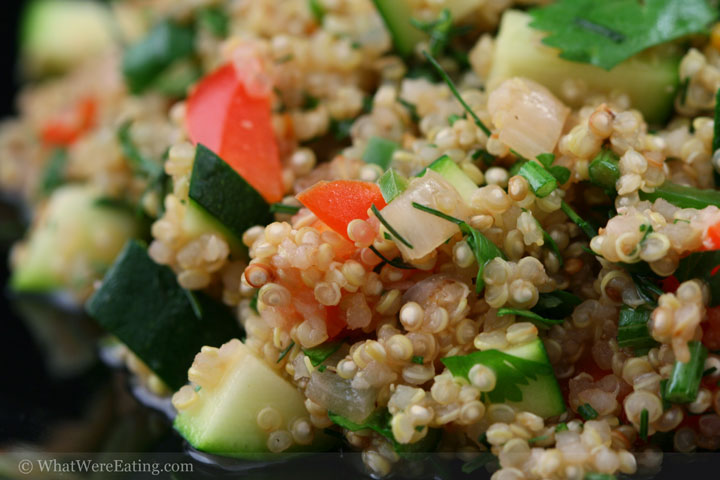
In contemporary times this crop has come to be highly appreciated for its nutritional value, as its protein content is very high (12%–18%), making it a healthy choice for vegetarians and vegans. Unlike wheat or rice (which are low in lysine), quinoa contains a balanced set of essential amino acids for humans, making it an unusually complete food. It is a good source of dietary fiber and phosphorus and is high in magnesium and iron. Quinoa is gluten free and considered easy to digest.
I'm using quinoa for it's full spectrum of amino acids

Here's meal 2 (lunch meal):
Ingredients:
100 g cooked quinoa
1 cup fresh coleslaw (chopped red and white cabbage, carrot, shallots, capsicum & a bit of low fat mayo and lemon juice)
1 cup freshly chopped spinach
1-2 tablespoons extra virgin olive oil
1 can of safcol Wild Atlantic Salmon (naturally smoked)
Avocado (optional)

Method:
Make sure to give the quinoa a decent soak and then rinse to remove the saponins which make it bitter. Cook the quinoa as directed in the wikipedia entry. Allow to sit/cool for 10 minutes before using.

I usually cook about 3 days supply at once and store it in the fridge. I cook 1 cup of raw quinoa in 2 cups of water. This produces enough for 3 meals.

Chop/slice the coleslaw ingredients. This is also usually done in bulk and then stored in the fridge and used as needed.

Following this I simply add all the ingredients together and mix and dress with the extra virgin olive oil.

I'll be sticking with these meals as daily essentials for sometime. When I don't have any prepared ingredients available I'll use other meals but I'm aiming to always have prep on hand


I'll update this post with the nutritional analysis of the above 2 meals in the next few days

Wednesday, June 25, 2008

My current health regime. Supplements, Training and others


The following is my personal supplement and health care regime.

Details: as of April 12th, 2008
I'm Male, 36 years old, 5'11" and weight 160lbs (~8-10% body fat).
Average BP: 105/65 HR: 45-50 bpm


Notes on my supplement intake and ordering:
-I cycle all of my supplements. I take them 5 days on 2 days off. Then I have a 7 days break every 3 months.
-I now buy in bulk (6 month supply) and store all my supplements in fridge (except protein). This keeps the cost down and increases discount % at iHerb. If I order a 6 month supply I will save US$120 on top of their already heavily discounted products. The shipping for a 2 month supply (US$50 to Australia) is the same as a 6 month supply hence, I save another US$100. Therefore I save US$220 (~AU$250) by ordering every 6 months saving me just over $40/month
Total cost per month ~AU$225 (includes delivery)

My Personal Supplement Regime: April, 2008
(
now with reference list. Most references are review papers based on human studies)

As soon as I wake: 60 minutes before breakfast

Silicon (as Stabilized Orthosilicic Acid) 6-10mg (Jarrow Formulas, Biosil Liquid) in 250mL Grapefruit juice (ref)

Rhodiola Rosea (Jarrow) 500mg (ref); adaptigen
Vitamin C Sustained release (NOW Foods) 1000mg; water-phase antioxidant
Ginkgo Biloba (Jarrow) 120mg (watching and waiting for results from 2 large dementia studies [GEM and GuidAge]); brain health
DMAE (Source Naturals) 130 mg
D,L-Phenylalanine 1000mg; dopamine precursor
EGCG Green Tea Extract (NOW Foods) 400mg (ref 1, ref 2); antioxidant, anticarcinogenic, antiobesity
Magnesium citrate 150mg
Alpha Lipoic acid (Na-RALA) 150mg; mitochondrial antioxidant (ref)
Acetyl-L-Carnitine 1000mg (ref); generally used in conjunction with Lipoic acid as a mitochondrial antioxidant
Huperzine A (Chinese club moss) 100mcg (ref); an AChE Inhibitor; used when not using Galantamine
Heliocare (Polypodium Leucotomos extract) 240mg (ref)
Meditation 10-15 minutes

With Breakfast:
Deprenyl (liquid selegiline citrate) 1 drop = 1mg (ref): MAO-B inhibitor
Probiotic Life Flora, 5 Billion Cells (Source Naturals) x 1; strengthen gut flora
Multivitamin (ADAM SUPERIOR NOW Foods) 1 tablet; broad spectrum MultiV&M used as a security blanket to prevent deficiency
Resveratrol (Nature's Way) 150mg (ref); longevity (research suggests bioavailability of current preparations are poor)
Red wine extract (Nature's way) 200mg (ref); cardiovascular health
Red wine Powder (Nature's way) 200mg
Grape Seed extract (Nature's way) 100mg (ref); polyphenol antioxidant
Fish Oil (Natural Factors, RxOmega-3 Factors Pharmaceutical Grade Omega 3 Oils) 2000mg (ref); cardiovascular health
Methyl B-12 lozengers (Jarrow formulas) 1000mcg; vegetarian booster
Vitamin D3 (Healthy Origins) 2,400 IU (dosages based on ref1, ref2); sun replacement
Benfotiamine (Benfotiamine Inc.) 80mg (ref); anti-glycation
Aged Garlic (Kyolic Cardiovascular formula 100) 600mg (ref); cardiovascular health
Astaxanthin (NOW Foods) 4mg (ref); neuroprotective, cardiovascular health
Ubiqunol (coQH) 100mg (ref); cardiovascular health, mitochondrial antioxidant
Chromium GTF 200mcg (ref); blood sugar regulator/hyperglyceamia
Phytosterols (Beta-sitosterol and mix) 930mg just before breakfast (ref); cardiovascular health
Quercetin 500mg (ref); cardiovascular health
CDP-choline (citicholine Jarrow) 250mg (ref); choline donor, Cognitive enhancer/protector
FamilE (Jarrow) Tocos X 1; broad spectrum fat soluble antioxidant
Vinpocetine (Source Naturals) 20mg (ref); neuroprotector
Trimethyglycine (TMG) 1g (ref); regulate homocysteine levels
Aspirin 100mg (ref1, ref2)

Morning breakfast protein Mix:

1/2 cup cooked Organic Oats
100g Blueberries
100ml Organic Bonsoy soymilk
2 brazil nuts, 2 walnuts, 2 pecans
1 scoop of customised Protein from trueprotein.com (25 g protein from powder alone) containing:
40% Whey Protein Isolate Cold Filtered (ref1, ref2)
25% Micellar Casein (ref)
10% Creatine (3g); intracellular energy stores
10% Glutamine (3g) immune system, glucose metabolsim(ref)
5% Arginine (1.5g) cardiovascular health (ref)
5% Taurine (1.5g) intracellular buffer, sulphur amino acid, glucose metabolism (ref)
5% Leucine (1.5g) muscle protein synthesis (ref)

Mid afternoon 60 minutes before meal or training:
Vitamin C Sustained release (NOW Foods) 1000mg
EGCG Green Tea Extract (NOW Foods) 400mg
Magnesium Citrate 150mg
Acetyl-L-Carnitine 750 mg
Alpha Lipoic acid (Na-RALA) 150mg
Huperzine A (Chinese club moss) 100mcg

On training days:
15-30 minutes before training
Instantized Branch Chain Amino Acids (BCAA 2:1:1) 10 g in 400 mls water (ref)
---->Weight Training
Immediately after training session:
High Molecular weight CHO (Waxy Maize Starch) drink containing 10 g 50:50 BCAA-Leucine Mix (ref)
15-30 minutes after training: (ref)
Customized protein mix containing:
Hydrolyzed Whey protein 3 g
Whey protein Isolate cold filtered 22.5g
Creatine monohydrate 3g
Leucine 1.5g (to up BCAA ratio)

With afternoon meal/dinner/ or 2 hrs post training with meal (usually around 4 or 5 pm):
Multivitamin (ADAM SUPERIOR NOW Foods) 1 tablet
Resveratrol (Nature's Way) 150mg
Red wine extract (Nature's way) 200mg
Red wine Powder (Nature's way) 200mg
Grape Seed extract (Nature's way) 100mg
Fish Oil (Natural Factors, RxOmega-3 Factors Pharmaceutical Grade Omega 3 Oils) 2000mg
Benfotiamine (Benfotiamine Inc.) 80mg
Aged Garlic (Kyolic Cardiovascular formula 100) 600mg
Vinpocetine (Source Naturals) 20 mg
Chromium GTF 200mcg
Saw Palmetto (Jarrow) 160 mg (with 160mg Pumpkin seed oil)
Trimethyglycine (TMG) 1g

Night Time Protein Mix: taken with my night shake (25 g protein) consumed at 9pm
60% Michellar Casein: slow digesting protein (ref)
15% Whey Protein Isolate Cold Filtered
10% Glutamine (3g)
5% Arginine (1.5g)
5% Taurine (1.5g)
5% Leucine (1.5g)

My night shake contains:
200mL organic soymilk
100-150ml water (or juice)
1 medium-large banana (when in season)
1 scoop Jarrow Berry High (optional)

1 hour before or just as I'm jumping into bed consumed at 10-10.30pm
Ashwaghanda 450mg from Sensoril™ (Withania somnifera [8% Withanolides]) adaptogen (ref)
Vitamin C Sustained release (NOW Foods) 1000mg
5-HTP 100mg (Doctors best) serotonin precursor
Magnesium Citrate 150mg
L-Theanine 200mg (SunTheanine) relaxation (ref)
Melatonin formula (Natural Sleep, LEF) containing: biocircadian rhythm, antiox, antiaging (ref)
Melatonin (immediate release) 2.5 mg
Melatonin (timed release) 2.5 mg
plus
Vitamin C (as niacinamide ascorbate) 220 mg
Niacin (as niacinamide ascorbate) 73.5 mg
Vitamin B-12 (as cyanocobalamin) 100 mcg
Calcium (as calcium citrate) 48 mg
Magnesium (as magnesium oxide) 120 mg
Chromium (as chromium polynicotinate) 50 mcg
Pyridoxal 5 Phosphate 10 mg
Inositol 100 mg

Meditation 10-15 minutes

Zoolander's skin care regime: current as of April 12th, 2008
Fairly basic. Consists of cleanse, moisturise and sunscreen in Morning and Cleanse and Retin A in evening

Monday-Sunday:
Morning: Cleanse with Cetaphil, Skinceuticals CE + Ferulic (ref), Sunscreen (ref)
Evening: Cleanse with Cetaphil, 0.025% Tazarotene (Thurs-Sun) 0.025% Tretinoin (Mon-Wed) ref

Zoolander's Nasal/oral hygeine routine: current as of April 12th, 2008
Morning: (after breakfast) Brush teeth with Colgate Total using the Oral B Triump 9950 Electric toothbrush with SmartGuide, rinse mouth with Listerine Antiseptic Mouthwash
Nasal/Sinus Irrigation (3-5 times per week more if needed)for clearing sinuses (ref): Using Grossan Hydropulse. I make a homemade ENT solution using 500mL warm water, 1 teaspoon of sodium chloride (table salt; final conc. ~0.9%) and 1/4 teaspoon Bicarb. I run 250mL through each nostril
Evening: brush with Biotene dry mouth toothpaste, Floss, rinse with Biotene PBF Mouthwash (ref)

Zoolander's Haircare routine: current as of April 12th, 2008. Currently have hair clippered to No1 hence no fuss
Daily: Organic conditioner
Twice weekly: 1% Ketoconazole Shampoo (Nizarol) to prevent dry scalp (ref). Massage into scalp and leave for 5 minutes

Others:
Twice weekly: skin brushing

Exercise regime: Current as of June, 2008
Aerobic/Cardio:

1. Ride to work Thursday-Sunday 10km each way. Hence ride roughly 80km's/week (8 x 10km rides) at roughly 140-150bpms (~80%HRmax). My Heart rate monitor (Polar 610i) reads this as roughly 300-350KCal each session or 650-700kcal per day.
2. Run once or twice per week to mix it up (Tues and/or Wed). 20-25 minutes each time at roughly 160bpm (85% HRmax). Heart rate monitor reads this as roughly 450kCal per session
3. I have also been doing a little rowing at the gym. I row about 4-5km per week
Strength:
1. I am trying to put on a little bulk so I'm using DC training. I'm training 4 days a week DC training plus doing core stability work as well as rotator cuff strengthen and Scapula stabilisation.
Flexibility:
work in progress...

Update

It's been a while.

A lot has happened in the last year or so. I've been busy finalising my Ph.D. I also had to redirect my focus re. my health because I was recently diagnosed with severe obstructive sleep apnea. It's been a real uphill battle. I'm 6 months in and still finding it hard to get use to the CPAP therapy. The maximum usage per night for me is about 2 hours. That's not the best but getting use to the therapy takes time. As long as I keep trying I winning the battle.

Anyhow I have updated the site and will try to commit to contributing to the site more often.

Wednesday, January 31, 2007

Rhodiola Rosea

DISCLAIMER: All recommendations from this blog for supplement intake should be considered with caution. Readers are encouraged to seek advice from a competent medical professional regarding the applicability of any recommendation with regard to any symptom or condition.

Health Hacker cannot be held responsible for any problem from any suggestion made in the blog or in any correspondence in association with this site.


The first supplement on my list is Rhodiola Rosea.

I get my information from many sources. The internet, books I own, Papers I have printed and so on. I will do my best to reference these

From the wiki on Rhodiola...

Rhodiola rosea (Roseroot) is a plant in the family Crassulaceae that grows in cold regions of the world. These include much of the Arctic, the mountains of Central Asia, the Rocky Mountains, and mountainous parts of Europe, such as the Alps, Pyrenees, Carpathian Mountains, British Isles, Scandinavia and Iceland.

Alternative medicine review explains....Rhodiola rosea (also known as golden root and Arctic root) has been categorized as an adaptogen by Russian researchers due to its observed ability to increase resistance to a variety of chemical, biological, and physical stressors. It is a popular plant in traditional medical systems in Eastern Europe and Asia, with a reputation for stimulating the nervous system, improving depression, enhancing work performance, improving sleep, eliminating fatigue, and preventing high altitude sickness. (1)

Active constituents

Rhodiola species contain a range of antioxidant compounds, including p-tyrosol, organic acids (gallic acid, caffeic acid, and chlorogenic acid), and flavonoids (catechins and proanthocyanidins). (2,3)

The stimulating and adaptogenic properties of Rhodiola rosea are attributed to p-tyrosol, salidroside (synonym: rhodioloside and rhodosin), rhodioniside, rhodiolin, rosin, rosavin, rosarin, mad rosiridin. (1,4) Rosavin is the constituent currently selected for standardization of extracts. (5)

p-Tyrosol has been shown to be readily and dose-dependently absorbed after an oral dose; (6,7) however, pharmacokinetic data on the other adaptogenic compounds found in Rhodiola rosea is unavailable.

Mechanisms of Action

The adaptogenic properties, cardiopulmonary protective effects, and central nervous system activities of Rhodiola rosea have been attributed primarily to its ability to influence levels and activity of biogenic monoamines such as serotonin, dopamine, and norepinephrine in the cerebral cortex, brain stem, and hypothalamus. It is believed the changes in monoamine levels are due to inhibition of the activity of enzymes responsible for monoamine degradation and facilitation of neurotransmitter transport within the brain. (8).

In addition to these central effects, Rhodiola has been reported to prevent both catecholamine release and subsequent cyclic AMP elevation in the myocardium, and the depletion of adrenal catecholamines induced by acute stress. (9).

Rhodiola's adaptogenic activity might also be secondary to induction of opioid peptide biosynthesis and through the activation of both central and peripheral opioid receptors. (10,11,12,13).

Rhodiola rosea is one of the more powerful plant adaptogens producing, within 30 min of administration, a stimulating effect that continues for at least 4-6 hours (14).

Here's a nice little diagram outlining the possible actions of Rhodiola Rosea taken from herbalgram.org

More recently (Jan, 2007) , in a paper published in Phytotherapy research, Rhodiola Rosea extract was shown to significantly, but not dose-dependently, induce an antidepressant-like, adaptogenic, anxiolytic-like and stimulating effects in mice after just one dose (15).

Side Effects and Toxicity

Clinical feedback indicates, at doses of 1.5-2.0 grams and above, Rhodiola rosea extract standardized for 2% rosavin might cause some individuals to experience an increase in irritability and insomnia within several days.

Evidence on the safety and appropriateness of Rhodiola rosea supplementation during pregnancy and lactation is currently unavailable.

A fellow scientist, Opales, who is a member at the Immortality institute, mentioned recently that Rhodiola may act to inhibit monoamine oxidases (MAO-I) and warns those taking other MAO-I's, such as resveratrol, green tea and selegiline (Deprenyl), of the possible dangers. You can read the article @ the Institute. I post under the nickname Zoolander and responded to his post.

Dosage

Dosage varies depending upon standardization. For chronic administration, a daily dose of 360-600 mg Rhodiola extract standardized for 1% rosavin, 180-300 mg of an extract standardized for 2% rosavin, or 100-170 mg of an extract standardized for 3.6% rosavin is suggested. Administration is normally begun several weeks prior to a period of expected increased physiological, chemical, or biological stress, and continued throughout the duration of the challenging event or activity.

When using Rhodiola rosea as a single dose for acute purposes (e.g., for an exam or athletic competition), the suggested dose is three times the dose used for chronic supplementation.

Rhodiola rosea has been administered for periods ranging from as little as one day (acute administration) up to four months. Until more specific information is available, a dosing regimen following the established patterns used with other plant adaptogens--with periodic intervals of abstinence --seems warranted when Rhodiola rosea is being used chronically.

As you can see from my above regime, I take 830 mg of Rhodiola Rosea (3% rosavin) per day in 2 evenly divided doses (i.e 415 mg x 2) on an empty stomach.

and so, the story begins

First and foremost, due to the nature of this blog, I must post a disclaimer. PLEASE READ.

DISCLAIMER:
All recommendations from this blog for supplement intake should be considered with caution. Readers are encouraged to seek advice from a competent medical professional regarding the applicability of any recommendation with regard to any symptom or condition.


Health Hacker cannot be held responsible for any problem from any suggestion made in the blog or in any correspondence in association with this site.

I've started this blog to outline the many things I do to maintain a level of optimal (health) functioning on a day to day basis. My program is fairly extensive and covers areas such as diet, dietary supplementation and various training techniques that include both the physical and psychological i.e meditation.

This blog is mainly for my own use. I will outline each area as I have time and then justify my choices. For example, I will first outline my supplement regime and then attempt to justify my choices with scientific research papers.

Things I will most likely be blogging about include:
-my supplement regime
-my exercise program
-meditation practice
-dietary recipes
-use of medications